

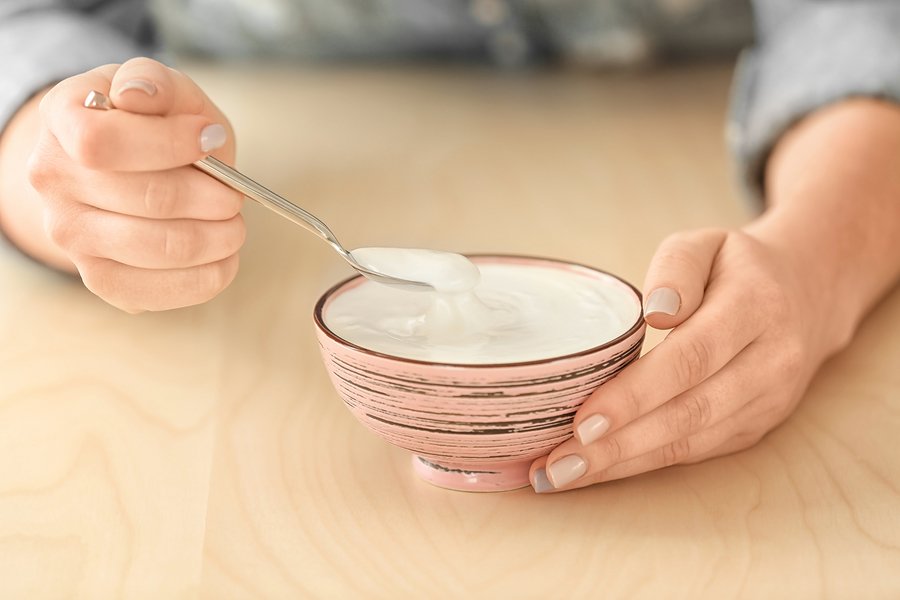
Complete kefir instructions
Nourish your gut the easy way. You can make refreshing, rebalancing, and really delicious kefir at home in just four steps.
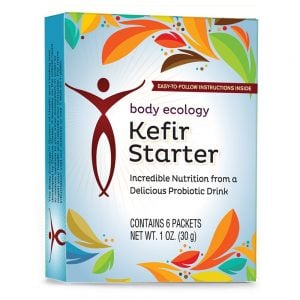
1. Into a container (preferably glass with an airtight lid), mix entire foil package of room temperature kefir and one quart of milk or young coconut water that has been heated to skin temperature (about 92 degrees).
*IMPORTANT* If using goat’s milk, use two cups milk and entire package of starter for the initial batch. After that, you may make as much as you want, depending on how much liquid is transferred from the previous batch (transfer ratios listed below).
2. Whisk and stir well. Put the lid on the container.
3. It is important to ferment at 72-75°F for 18 to 24 hours. It will thicken (slightly clumpy) and have a distinct sour aroma.
4. Once thickened, shake or stir vigorously and refrigerate. Kefir still ferments in the refrigerator, but the process is slower.
Transfer instructions (best to make transfers within 3 days)
Before you finish drinking your initial batch, begin the second by taking out some (see below for ratio) of the initial batch and combining with freshly warmed milk.
You may repeat this approximately seven times before you will need another foil packet. Body Ecology’s unique kefir starter contains strong, viable Lactobacillus bacteria and two strains of beneficial yeast that are unusually hardy, making the transfer process possible. This is only found with our starters.
Make transfers using the following proportions:
- 1 quart – Use 6 tablespoons of previous batch.
- 1/2 gallon – Use 2/3 cup or previous batch.
- 1 gallon – Use 1 cup of previous batch.
*These transfer ratios also apply to goat’s milk & coconut water. Do not add more than recommended amounts of previous batch. This will result in a taste more sour than you may prefer.
Making kefir cheese
1. Make kefir as instructed, but let the freshly made kefir remain at room temperature for several hours longer. The curds (milk protein) will separate from the whey.
2. Line a strainer with cheesecloth. Place strainer over bowl, and pour the curds and whey mixture through the strainer. The strainer will catch the “cheese” or curds, and the whey will go into the bowl. Place the strainer and bowl into your refrigerator and let it drain for several more hours. Store in covered container for up to 5 days.
*WARNING* Once kefir is placed into the refrigerator and cooled, the fermentation process is inhibited. You CANNOT then bring it back out to room temperature to turn into cheese.
Uses for kefir cheese
This cheese is excellent tossed into salads. It is also delicious flavored (e.g., chopped onions, garlic, sea salt, fresh herbs) and served with an assortment of raw vegetables.
Uses for whey
Body Ecology recommends soaking all your grains before cooking them. This makes them more digestible and releases the phytic acid. Several tablespoons of the microflora-rich whey can be added to your soaking water.
In Europe, whey is sold as a delicious beverage. Try sweetening it with Body Ecology’s Liquid Stevia Concentrate, flavored with non-alcoholic flavorings, or fresh lemon or lime juice.
Young Coconut Kefir is a discovery unique to Body Ecology. It has quickly become one of our favorite medicinal drinks! Young Coconut Kefir is an important probiotic, alkalizing, and mineral-rich fermented food.
Start drinking Young Coconut Kefir immediately in the early stages of the Body Ecology Diet. In fact, you’ll soon find that with its abundance of exceptionally powerful and beneficial microflora, it will help you establish your inner ecosystem.
Nutritional benefits of young coconut kefir
Though there is no definitive supporting research, many have reported that coconut kefir stops cravings for sugar; aids in the digestion of all foods, while toning and cleansing the intestines and the liver; eases aches and joint pains; clears up skin problems, like brown liver spots, skin tags, moles, etc.; improves vision; makes hair and nails healthier because of its high mineral content (potassium, natural sodium, and chloride); and cleanses the endocrine system (adrenals, thyroid, pituitary, ovaries).
Equipment:
Young coconuts, a cleaver, a potato peeler, and Body Ecology’s Kefir Starter or Veggie Culture Starter.
Preparation:
1. Carefully select young healthy green or shucked coconuts, checking for any mold, discoloration, or difference in texture.
2. Lay the coconut on its side. Cut several thin slices from the bottom.
3. A circle appears (often a white or brown ring), and you will find a soft spot, which you can penetrate to reach the sterile, sweet coconut water. Sometimes, a hard knot makes it more difficult to cut through the coconut. Usually, the hole is in or beside this knot.
4. Set the coconut down into sink, so the “cone-shaped” head nestles firmly into the drain. Poke down through the soft spot, creating a hole in the coconut shell.
5. Widen the hole with a carrot peeler, so water can easily pour out.
6. Each coconut contains 1 to 1.5 cups of water
7. Ideally, coconut water should be 92°F (31 or 32°C). Microflora prefer this temperature, so pour the coconut water into a saucepan and heat carefully. Use a cooking thermometer if desired to check the temperature, or wash your hands well and dip your finger into the coconut water to test for the right temperature. At 92°F, you won’t feel either hot or cold. It should be around the same temperature as an infant’s formula, just below body temperature.
BE CAREFUL NOT TO OVERHEAT. Above 100 degrees, much of the enzymes and vitamins are destroyed, and at this temperature, the microflora will also die.
8. Add 1 foil pack of BE Kefir or Veggie Culture Starter. Kefir contains Lactobacillus and beneficial yeast. Veggie Culture contains L. plantarum. Each of these formulas provides important beneficial bacteria.
9. Pour coconut water with starter into a glass container with tight-fitting lid. Use 3 to 4 coconuts to fill 1 to 1.5-quart jar.
10. Put lid onto the glass container and shake vigorously.
11. Ferment at 70°F – 75°F for 36 hours. Insulate if necessary to maintain this temperature
Coconut kefir FAQs
Shucked coconuts should be white in color, and the outside should be slightly moist and not moldy.
The coconut water is bad if it is pink. In this case, discard.
Coconut water kefir does not thicken like milk kefir. It is ready when it becomes cloudy and an effervescent layer forms on the top. The taste is slightly tart and tangy, while some of the original sweetness remains.
Ferment the coconut meat by soaking it in coconut kefir for 24 hours.
For step by step video instructions, click here.


