

Enemas: Is this the recovery tool you’re not using yet?
Most people greet the notion of home enemas with a wince and a snicker. But knowing the benefits of an enema can change that wince into a sigh of relief. When administered safely, an enema can actually be a very nurturing experience.
Think of it as an internal bath for your colon
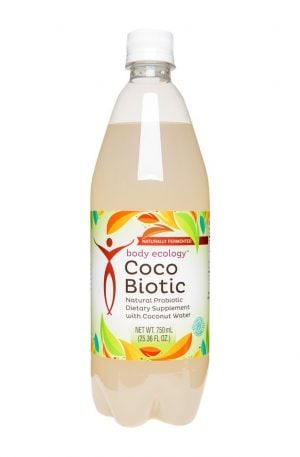
When you start drinking probiotic beverages like CocoBiotic, harmful bacteria and yeast may begin to die off in your intestines. You can use a gentle home enema to support the release of these toxins.
An enema is a method to help flush waste out of the colon. It’s not such a bad idea when you consider that the average person may potentially hold up to 10 pounds or more of non-eliminated waste in the large intestine.
Simply put, an enema helps clean up the colon and induce bowel movements, typically leaving you feeling cleaner, lighter, and healthier almost immediately.
The main job of your colon is to absorb water and nutrients from food and remove waste and toxins.
Over the years, your colon’s walls may become encrusted with non-eliminated waste, often making it sluggish and inefficient.
It’s possible that some of the following symptoms may be related to a slow-moving colon and digestive system:
- Allergies
- Depression
- Headache
- Fatigue
- Loss of appetite
- Inability to concentrate
- Indigestion
- Irritability
- Stomach pains
- Swelling
For those who want to start cleansing, an enema may be an ideal place to begin. As usual, we would advise that you speak with your functional medicine doctor or practitioner before embarking on something like this since they are well aware of any conditions you may have.
If you’re new to Body Ecology, you may want to consider starting with a series of colonics or enemas. This is something not many people are talking about. Even among health professionals and gut health experts, people don’t talk about colonics or enemas when they’re talking about gut health.
But enemas can be powerful tools to help us open up our detoxification pathways.1,2
When used regularly, cleansings may not be as severe. Let’s say you wake up one morning, and you’re feeling exhausted. Suppose you get your enema bucket and take about half an hour to do an enema. Then you jump in the shower and get dressed. In this scenario, many people within our Body Ecology community report feeling fantastic by the time they’re out the door.
This is just one example of how to help manage your health with a home enema.
When exactly do you need an enema?
Before we get into enema-techno, let’s take a look at what you may potentially find help for or relief from with regular home enemas:
- Backache
- Bloating
- Candida yeast infections
- Constipation
- Fatigue
- Flatulence
- Indigestion
- Headaches
- Hemorrhoids
- Loss of concentration
- SIBO symptoms
- Sinus congestion
- Skin conditions
- Unpleasant breath
If you experience any of these conditions, it’s a possible sign that an enema can be considered. Even when you’re feeling great, helping to release extra toxins may make you feel even better.
As a note, enemas can help to keep you regular and relieve constipation caused by everyday stresses and our modern diet. But if you find yourself chronically constipated with symptoms that even an enema won’t fix, it’s important to see a doctor right away.
Yale researchers actually uncovered a surprising connection between constipation and herpes infection.3 Soon after, another link between constipation and kidney disease was revealed.4
Add to that the fact that chronic constipation may increase the risk of colorectal cancer, and you might have a serious problem on your hands that could warrant more attention.5
The relationship between constipation and herpes infection, supported by research, is an interesting one discussed in our Antiviral Protocol:
- In order to help manage a virus, whether it’s dormant or active, we always encourage people to learn how to do an old-fashioned home enema. This applies to a virus like herpes that has been linked to constipation, and to many other viruses. Constipation can be a common side effect of a virus. A simple enema treatment was reportedly used during major epidemics, including flu epidemics, for centuries.6
- You can familiarize yourself with the home enema as a day-to-day wellness and recovery tool, and you can also use it to help support yourself in another viral pandemic. For most of us, we’re under so much stress, and our immune systems are so slammed all the time, that when a virus does begin to make its way around the world, we could be vulnerable. This is again why it may help to learn how to do a home enema.
As you recommit to your health and begin embracing the Body Ecology lifestyle, home enemas may also be helpful for:
- Colon cleansing – If you’re using any type of clay cleansing agent to pull toxins out of the system, you may want to include an enema to help release the bulk. Otherwise, you may pull out toxins and leave them with nowhere to go.
- Fasting – If you choose to fast, home enemas may be really useful. You must keep things moving out because your cells may be dumping their toxins. You’ll feel miserable if you’re not cleaning downstream. Once you’ve done an enema, you’re more hydrated, and many toxins may be released. You’re also going to think twice before you start adding toxic substances back into your body. In this way, colonics and enemas may help indirectly with food cravings.
- Fermented foods – As you begin to integrate fermented foods and drinks into your diet, such as cultured vegetables, kefir, CocoBiotic, or InnergyBiotic, you might experience symptoms of yeast and pathogenic bacteria die-off as the good bacteria begin to colonize your inner ecosystem. Gas and bloating are a signal that the mighty microbes are busy attacking waste in and on the colon walls. Home enemas may help rinse out these toxins, helping to shorten the discomfort you might be feeling.
- Liver cleansing – Because your liver dumps its toxins into your colon, you want to make sure the colon is open and in perfect working order to move all those toxins out quickly. Interestingly, pimples may possibly be a sign of needing an enema and requiring support for your liver.
New to fermented foods? Use this course to get started.
Home enemas aren’t a new fad — here’s proof
They’re also not something that’s only performed by the health-obsessed. It wasn’t that long ago that home enemas were routinely prescribed by doctors as part of a normal cure for illness.
An Egyptian king, as early as 1,500 B.C., was known to receive routine home enemas by a physician who used them for regular medical treatments. The Egyptians believed that all diseases were caused by tainted, unwanted additions to food, or too much food, and understood how an enema may help offer relief to serious situations.7
Ancient regions in Africa, Greece, Babylonia, India, and China used enemas. Native Americans performed enemas. Louis XIV had almost 2,000 enemas in his lifetime and stayed healthy throughout. And even the vivacious Mae West started every day with a morning enema.
While the medical community has somehow disconnected itself from the benefits of home enemas, some medical professionals are slowly coming around. Suzy Cohen, also known as “America’s Pharmacist,” confirms that coffee enemas are safe when performed by holistic physicians and even at home in her Ask the Pharmacist column.
Cohen goes on to say that coffee enemas can be used as therapeutic treatment for a number of conditions, like constipation, fatigue, liver detoxification, and cancer.8 Research has confirmed the effectiveness of administering therapeutic agents through the colon instead of the mouth.9
Cleansing or retention? 2 separate-but-powerful tools
There are two types of home enemas:
1. The cleansing enema is retained for a short period of time until your natural peristaltic movement eliminates both the water and the loose fecal material. It gently flushes out the colon.
2. The retention enema is held in your body for longer. For example, the famous “coffee enema” is retained for approximately 15 minutes or can also be left in and absorbed.
Coffee enemas are an example of short-term (15-minute) retention enemas. They were made popular by Max Gerson, MD, who used them with cancer patients to open the bile ducts and increase bile flow, helping to rid the liver of impurities.
An analysis observed six case studies of cancer patients who followed Gerson therapy, which included treatment with coffee enemas. Patients on the Gerson regimen showed some evidence of both physical and psychological support.10
In Dr. Gerson’s book, A Cancer Therapy, he documents case studies on how his anti-inflammatory diet, along with coffee enemas, helped his patients.1
Examples of cleansing enemas (added to water per enema kit instructions) include:
- Apple cider vinegar – May help with viral conditions and clearing mucus. May be useful if you suffer from nasal congestion or asthma. (2 to 3 tablespoons diluted in water.)
- Burdock root – May support the elimination of calcium deposits and purification of the blood.
- Catnip tea – May relieve constipation and congestion and help bring down a high fever.
- Lemon juice – Just what you need to help clean the colon of fecal matter, balance its pH, and detoxify the system.
Examples of retention enemas (added to water per enema kit instructions) include:
- Coffee – A coffee solution (we mean a mold-free, organic coffee like S.A. Wilson’s) may help stimulate both the liver and the gallbladder to release toxins.2,11 (15 minutes only; please consult with your doctor if you have hypertension.)
- Minerals – May help rebuild the energy of the adrenals and the thyroid.
- Probiotic drinks – May be useful for candidiasis and other yeast infections.
- Red raspberry leaf – High in iron, supportive of the eyes, and particularly helpful for women.
Each enema requires a slightly different method, but the results for either type have the same potential benefits.
When a smaller amount of liquid is retained permanently, we prefer to call this an implant. One cup of liquid with a probiotic, minerals, or something green with chlorophyll (like wheatgrass) makes an excellent implant. This’ll quickly have you on your way to a happier, healthier colon.
You want me to put what, where?
Before you hit the “Exit” button, let us put your mind at ease. The thought of an enema can be a little off-putting, but they’re really much more comfortable than you might anticipate.
In fact, an enema can be a very nurturing experience.
At Body Ecology, we highly recommend the Colenz Home Cleansing unit. We particularly like how it’s a convenient and inexpensive way of cleansing the colon.
This procedure is considered very safe and will help keep the colon free and clean of debris, layers of mucus buildup, bacteria, and parasites that all contribute to disease. Again, before using, please contact your health practitioner.
Most people who are new to enemas come to us with one question. They ask, “Am I washing out all my good bacteria?” In short: No, because a whole bunch of bacteria are leaving anyway in your stool, and many more bacteria are already nestled into your gut mucosal lining.
And, you’re always going to be sending new bacteria in every day when you’re drinking probiotic drinks and eating cultured foods.
So, no, you won’t get in trouble washing out your gut microbiome. You will be helping these toxins leave your body, and the cells in your body will be so grateful. After a while, the cells will actually know, “Wow, things are moving out like they’re supposed to. Let’s send out more of our toxins.”
Then, toxins may be released everywhere — through your liver, into your bile, into your stool, and out of your body.
This is a perfect picture of why enemas are a wonderful way to help detoxify. Follow the cleansing unit instructions, honor your uniqueness, listen to your body, and use enemas as they were intended: as a cleansing and recovery tool.
REFERENCES:
- 1. Gerson M. A Cancer Therapy: Results of Fifty Cases. 3rd edDel Mar, CA: Totality Books; 1977.
- 2. Kim ES, Chun HJ, Keum B, Seo YS, Jeen YT, Lee HS, Um SH, Kim CD, Ryu HS. Coffee enema for preparation for small bowel video capsule endoscopy: a pilot study. Clin Nutr Res. 2014 Jul;3(2):134-41. doi: 10.7762/cnr.2014.3.2.134. Epub 2014 Jul 29. PMID: 25136541; PMCID: PMC4135241.
- 3. William Khoury-Hanold, Brian Yordy, Philip Kong, Yong Kong, William Ge, Klara Szigeti-Buck, Alexandra Ralevski, Tamas L. Horvath, Akiko Iwasaki. Viral Spread to Enteric Neurons Links Genital HSV-1 Infection to Toxic Megacolon and Lethality. Cell Host & Microbe, 2016; 19 (6): 788 DOI: 10.1016/j.chom.2016.05.008.
- 4. K. Sumida, M. Z. Molnar, P. K. Potukuchi, F. Thomas, J. L. Lu, K. Matsushita, K. Yamagata, K. Kalantar-Zadeh, C. P. Kovesdy. Constipation and Incident CKD. Journal of the American Society of Nephrology, 2016; DOI: 10.1681/ASN.2016060656.
- 5. Guérin A, Mody R, Fok B, Lasch KL, Zhou Z, Wu EQ, Zhou W, Talley NJ. Risk of developing colorectal cancer and benign colorectal neoplasm in patients with chronic constipation. Aliment Pharmacol Ther. 2014 Jul;40(1):83-92. doi: 10.1111/apt.12789. PubMed PMID: 24832002.
- 6. Holtenius J, Gillman A. The Spanish flu in Uppsala, clinical and epidemiological impact of the influenza pandemic 1918-1919 on a Swedish county. Infect Ecol Epidemiol. 2014;4:10.3402/iee.v4.21528. Published 2014 Jan 17. doi:10.3402/iee.v4.21528.
- 7. Doyle, D. Per rectum: a history of enemata. J R Coll Physicians Edinb 2005; 35:367–370. © 2005 Royal College of Physicians of Edinburgh.
- 8. Cohen, Suzy, RPh. “Coffee Enema Benefits For You,” 2013.
- 9. McConnell EL, Basit AW, Murdan S. Colonic antigen administration induces significantly higher humoral levels of colonic and vaginal IgA, and serum IgG compared to oral administration. Vaccine. 2008 Jan 30;26(5):639-46. doi: 10.1016/j.vaccine.2007.11.071. Epub 2007 Dec 18. PMID: 18178292.
- 10. Molassiotis A, Peat P. Surviving against all odds: analysis of 6 case studies of patients with cancer who followed the Gerson therapy. Integr Cancer Ther. 2007 Mar;6(1):80-8. doi: 10.1177/1534735406298258. PMID: 17351030.
- 11. Wilson, Lawrence, MD. “Coffe Enemas.” LD Wilson Consultants, Inc., 2018.
LATEST ARTICLES




POPULAR ARTICLES



Customer Reviews

Really settles my stomach. Love it!
This is an excellent probiotic, I drink it daily.


