

What Type of Bottles, Containers & Other Packaging is Most Unhealthy? Which are Safest?

Drinking water should be healthy for you, but some plastic water bottles may leach a dangerous chemical into your water that can cause cancer!
Plastic bottles, containers, and metal cans are convenient, but they are not always safe.
Since canned food recently celebrated its 200th birthday (link to Rana’s article Happy Birthday to Our Canned Food: The Food Can Celebrates Its 200th Birthday) on August 25, this gives us the opportunity to reflect on where our modern US food packaging came from and how it still affects us today.
Unfortunately, recent studies have shown that many food containers contain a dangerous toxin called bisphenol A.1
Bisphenol A, or BPA, is a hormone disrupting toxic chemical that can cause developmental, neural and reproductive harm. BPA can mimic hormones in your body and has been linked to obesity, prostate cancer, and breast cancer.2
Manufacturers use BPA to make certain plastics, specifically polycarbonate, the shatter-proof plastic used for most baby bottles.
BPA can be found in these common consumer products:
- Plastic bottles and containers
- Beverage cans
- Linings of canned food containers
- Dental fillings and sealants

Could your baby be drinking out of toxic plastic? Find out vital information about the chemical manufacturing of baby bottles.
Researchers found the highest levels of BPA in these canned foods: infant formula, chicken soup, and ravioli.3 But just because you do not consume these things does not mean that you are safe! BPA is so common these days that one study discovered the toxin in almost every person they tested!4
One more important fact is that how much you pay and where you buy these consumer goods has no reflection on whether or not the contaminant is present, meaning that no commercial goods are entirely safe.3
Bisphenol A leaches from containers into your food or drink, and even at low levels may cause harm.
Bisphenol A can leach out of containers when you:
- Heat bottles and containers
- Fill bottles and containers with hot liquids
- Use harsh detergents to clean bottles and containers
- Put acidic foods and drinks in bottles and containers
How to Protect Yourself From BPA Plastics
There are plenty alternatives to plastics containing BPA.

Here at Body Ecology, we recommend Pyrex glass storage containers instead of common plastic ones for food storage.
Also, upright glass storage containers and glass “canning jars” from companies like BALL come with tight fitting lids. These are the best containers to use when you make your own fermented foods and drinks at home. YOU DO NOT WANT TO EVER FERMENT IN PLASTIC.
Upright stainless steel containers and pickling crocks are also good for fermenting, but make sure they are airtight. And of course, you can’t see inside stainless steel, so glass is more fun and widely available.
Always think reusable. Then you will be reducing your environmental footprint at the same time!
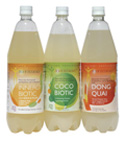
All Body Ecology probiotic liquids come in no-leach plastic containers. With special expansion lines that circle the bottle, the container expands as the product expands. Try our delicious Probiotic Liquids today!
Try these safe plastics that do not contain BPA:
- Polypropylene, designated #5 PP
- High-density polyethylene, designated #2HDPE
- Low-density polyethylene, designated #4 LDPE
- (To find the designation, just look on the bottom of your bottle or container.)
You may also notice that Body Ecology probiotic liquids come packaged in plastic containers. Unfortunately, glass bottles simply won’t work, or the bottles would explode. However, our line of probiotic liquids come in special plastic bottles that expand with the products and will not leach.
Next time you receive a shipment of our healthy probiotic liquids, notice the expansion lines that circle the bottle. Most other bottles collapse and deteriorate inward, but our bottles are different. The expansion lines ensure that as the product expands, so does the bottle.
In short, plastic bottles and containers may be convenient, but they are not always the best option for your health.
Use safe plastics, metals, and glass to protect yourself and your family from Bisphenol A. It may take a little more effort, but protecting your health is worth it!
Sources:
- Florio, Jill, “Nalgene Water Bottles Might Be Toxic,” BellaOnline.com. http://www.bellaonline.com/articles/art23142.asp
- Whittelsey, Frances, “Hazards of Hydration,” Sierra Magazine.
http://www.sierraclub.org/sierra/200311/lol5.asp“Toxic Chemical Leaches From Popular Baby Bottles,” EnvironmentCalifornia.org, 3 March 2007.
http://www.reusablebags.com/news.php?id=18Cone, Marla, “Study Cites Risk of Compound in Plastic Bottles, ” LA Times, 13 April 2005.
http://www.reusablebags.com/news.php?id=18 - A Survey of Bisphenol A in US Canned Foods, 5 March 2007. http://www.ewg.org/reports/bisphenola/execsumm.php
- A Survey of Bisphenol A in US Canned Foods, EWG.com, 5 March 2007.
http://www.ewg.org/reports/bisphenola/execsumm.php - Florio, Jill, “Nalgene Water Bottles Might Be Toxic,” BellaOnline.com. http://www.bellaonline.com/articles/art23142.asp
LATEST ARTICLES


POPULAR ARTICLES



Customer Reviews

Really settles my stomach. Love it!
This is an excellent probiotic, I drink it daily.


