

How to Use Probiotics as a Quick & Highly Effective Diarrhea Remedy
If you’ve ever had diarrhea, then you know how uncomfortable the frequent, loose stools can be. Even worse, they are often accompanied by abdominal pain, nausea and vomiting.
Diarrhea is a symptom of an infection or irritation in your digestive tract. Antibiotics frequently cause “antibiotic-associated” diarrhea. An allergy, food intolerance and also food-borne illness cause diarrhea as well. Eating too much of a laxative food like prunes can be a problem as well but regardless of why you have it, diarrhea is miserable for anyone.

Ending your diarrhea is as simple as taking a drink! Probiotic-rich fermented drinks are a diarrhea remedy filled with good bacteria that can actually heal your gut!!
Why Diarrhea?
During digestion, your food mixes with water. Once the digested food, now in the form of a watery liquid called chime, reaches your large intestine, the liquid should be absorbed, leaving a well-formed stool.
But if your gut is inflamed or damaged, it cannot absorb the water, and you experience diarrhea.
Viral infections and bacterial toxins are the most common causes of diarrhea, though stress and diet can contribute to an inflamed colon too.
One pathogenic bacteria in particular, Clostridium difficile, thrives in your gut after you have taken antiobiotics. Clostridium difficile causes the inflammation that leads to diarrhea in many people and is commonly found in children with autism.
How Probiotics Remedy Diarrhea
Most diarrhea can remedied and most importantly prevented naturally by populating your intestines with a “skillful” array of beneficial microflora…the good bacteria and yeast that protect you everyday by performing many vital functions inside you).
Think of your intestines as an ecosystem (your inner ecosystem): when everything is in balance, they function properly and you have normal stools. If something is out of balance, your gut becomes an environment where pathogens can thrive and you experience digestive distress like diarrhea.
Saccharomyces boulardii (or S. boulardii) is a beneficial yeast and powerful probiotic that can help maintain the natural flora in your intestines to remedy and prevent uncomfortable diarrhea.
S. boulardii is so effective that scientists recommend it to remedy:
- Acute diarrhea1
- Recurrent Clostridium difficile infection2
- Irritable Bowel Syndrome (IBS)3
- Inflammatory Bowel Disease4
- Crohn’s Disease5
The Best Probiotics for Diarrhea
The best way to get immune-enhancing probiotics like S. boulardii is from fermented foods and drinks that contain this wonderful microscopic organism.
Every bottle of Body Ecology’s fermented probiotic liquid concentrates like CocoBiotic has an abundance of S. boulardii and other beneficial microflora, especially acidophilus! These special probiotic concentrates are a delicious, refreshing and economical way to repopulate your inner ecosystem with beneficial bacteria and yeast that can help remedy diarrhea and help protect you from getting it again.
If you are suffering from diarrhea, then try any or all three of our probiotic liquid options that contain large amounts of the “superhero” of the microflora world, S. Boulardii:
Cocobiotic is made from wild-crafted coconut water from Thailand. It is extracted and immediately frozen to retain it’s freshness until we ship it to Australia. There it is fermented especially for Body Ecology and is then air-freighted to us here in the US. Even though it took us over two years to source out the wild-crafted coconut water and create this product, we knew it would become an important answer for people who love the benefits of coconut water yet needed a convenient alternative to finding, cracking and fermenting it themselves.
Like all our probiotic liquids it is a very concentrated way to obtain beneficial microflora essential for wellness.
- Cocobiotic is not the same as young coconut kefir – for one thing young coconut kefir does NOT have the S. Boulardii cited above, but CocoBiotic does — and it has other different strains of microflora. Cocobiotic is, for example, also especially rich in two beneficial Lactobacillus bacteria named L. acidophilus and L. delbruekii. And again, Cocobiotic contains the beneficial yeast, S. Boulardii.
The young coconut kefir that you can make at home from our starter kit has five totally different beneficial microflora called lactococcus lactis, lactococcus cremoris, diacetylactis, leuconostoc cremoris and lactobacillus kefir. The two super-hardy yeast in young coconut kefir are named klyvermyces and Saccharomyces unisporus.
- Fermented Dong Quai is another convenient drink that has been designed to help increase your energy, elevate your moods and balance your hormones. It contains four highly beneficial bacteria including S. Boulardii … you are encouraged to read more about Dong Quai here.
- Grainfield’s BE Wholegrain Liquid has plenty of grain-loving beneficial microflora – four different types including S. Boulardii. Read more about BE Wholegrain Liquid here.
To learn more about these delicious fermented drinks – including greater detail on the benefits of each — be sure to read Which Type of Probiotic Liquid Should You Choose? Is There A Best One For You?
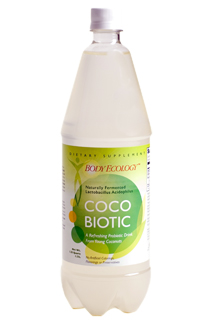
Cocobiotic
is great for diarrhea and digestive distress. This fermented drink populates your gut with good bacteria like S. boulardii to help you get well and stay that way!The End of Diarrhea and Digestive Distress
Diarrhea and digestive distress do not have to be a part of your daily life.
Instead, begin to incorporate beneficial probiotics into your diet for relief. If diarrhea is not a concern for you now, prevent it by incorporating them into your life right away.
You can reach for healing fermented foods and drinks to keep you healthy, and your digestive problems including bowel discomfort will become a thing of the past.
Sources:
- Höcher W, Chase D, Hagenhoff G (1990). “Saccharomyces boulardii in acute adult diarrhea. Efficacy and tolerance of treatment”. Münch Med Wochenschr 132: 188-92.
- McFarland L, Surawicz C, Greenberg R (1994). “A randomized placebo-controlled trial of Saccharomyces boulardii in combination with standard antibiotics for Clostridium difficile disease”. J Am Med Assoc 271: 1913-8
- Maupas J, Champemont P, Delforge M (1983). “Treatment of irritable bowel syndrome with Saccharomyces boulardii: a double blind, placebo controlled study”. Medicine Chirurgie Digestives 12(1): 77-9.
- Guslandi M, Mezzi G, Sorghi M, Testoni P (2000 Jul). “Saccharomyces boulardii in maintenance treatment of Crohn’s disease”. Dig Dis Sci 45(7): 1462-4.
- Guslandi, et al.
LATEST ARTICLES


POPULAR ARTICLES



Customer Reviews

Really settles my stomach. Love it!
This is an excellent probiotic, I drink it daily.


