

Tired, Sluggish, or Having a Hard Time Losing Weight? Here’s What Your Doctor Might Not Be Telling You
Feeling exhausted? Low on willpower? Having difficulty losing weight? Think it’s your thyroid? Think again — because many hypothyroid symptoms are so similar to adrenal dysfunction symptoms that the two are often confused.
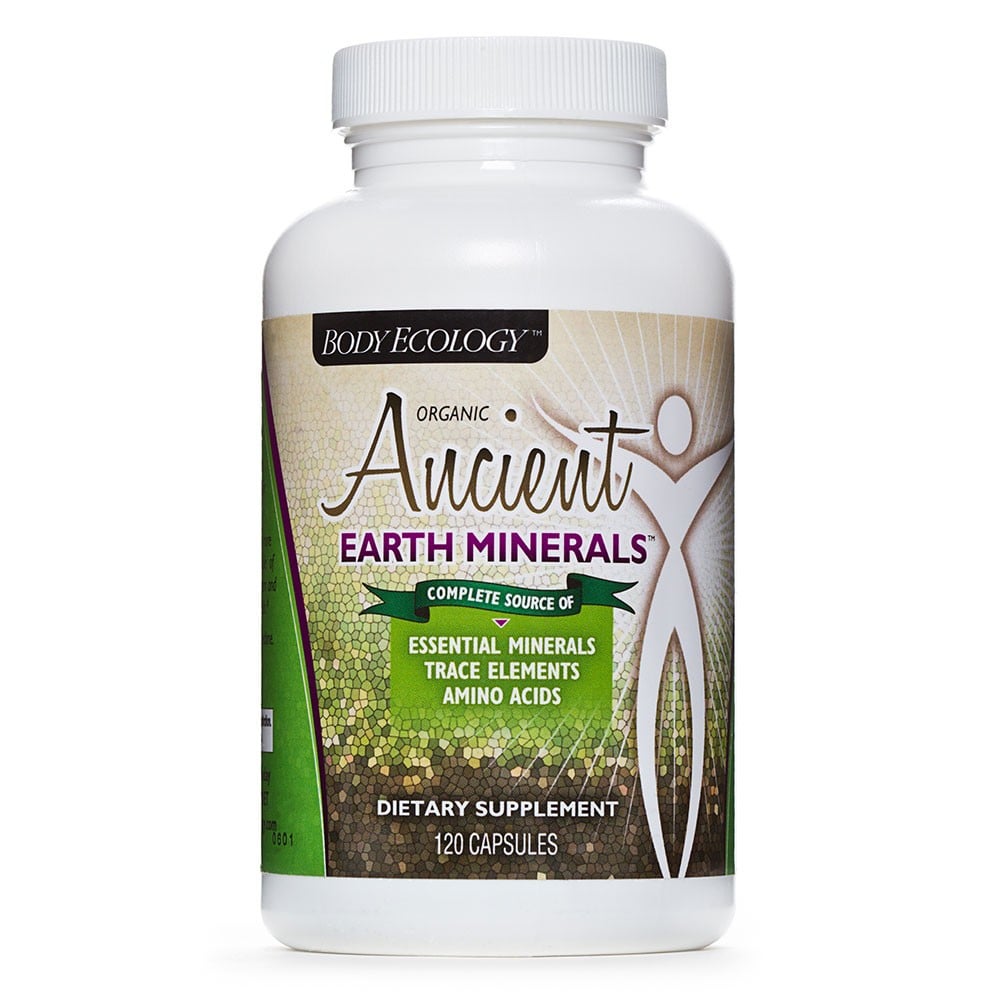
Many walk around with adrenal dysfunction not even knowing it. Each day, your adrenals need plenty of high-quality minerals. And these days, farming methods have depleted minerals from our produce. The good news is that you can nourish your adrenals with Ancient Earth Minerals. Ancient Earth Minerals has the highest quality, bioavailable humic, fulvic, micro, and macro minerals and amino acids available.
Body Ecology teaches that creating energy in a person’s body is essential in order to establish, regain, or maintain health, and it’s your adrenals and your thyroid efficiently working together that really supply you with energy.
Your adrenals, two walnut-sized organs that sit on top of your kidneys, are the workhorses of your body. If you are exhausted, chances are, your adrenals — and their partner the thyroid — need attention. What happens when the adrenals and thyroid have lost their life force or “spirit?” Your digestive system, the organs in your brain (e.g., hypothalamus and pituitary), your thyroid, liver, endocrine system, sexual organ system, heart, and central nervous system suffer.1
Chronic Stress May Lead to Adrenal Dysfunction
The adrenals are your “lifesaving” organs because they control your body’s hormones and help you survive in stressful situations. They act as control organs for the fight-or-flight response and secrete many of our most important hormones, including pregnenolone, adrenaline, estrogen, progesterone, testosterone, DHEA, and cortisol.
Cortisol, often referred to as the death or stress hormone does have some life-giving tasks. For example, cortisol helps: prepare your body for survival in stressful situations; metabolize carbohydrates, proteins, and fats into energy; slow the immune system’s inflammatory response; regulate the balance of converting insulin in breaking down sugar for energy, and maintain cardiovascular health and blood pressure.2
Cortisol becomes the “death hormone” when levels remain too high — which it does under chronic stress. The human body was designed to respond effectively to stress and then have periods of rest in between. Unfortunately, our modern-day society is so full of constant stressors that we are no longer having that time of rest.
There is an eloquent connection between your adrenals and your brain. These organs are constantly in communication with each other, using chemical messengers (or hormones) that flow between the adrenals, the hypothalamus, and the pituitary. In 2010, Swedish researchers underscored this connection when they discovered that exhaustion syndrome, or burnout, can cause measurable changes in the brain — by reducing activity in the frontal lobes and affecting how the brain regulates cortisol.3
Even more interesting, in 2016 University of Utah researchers observed how the brain and the adrenals were affected in the symbiotic relationship between mother and child. A depressed mother who experiences stress while pregnant can pass her stress response on to her baby through the placenta — altering an infant’s hypothalamic-pituitary-adrenal axis. The ripple effect of this maternal stress response may manifest as low birth weight, hindered brain development, and increased susceptibility to illness in a child. Fortunately, having a sensitive caregiver, even when a mother has postpartum depression, can help to “turn on” genes that allow babies to better manage and adapt to stress.4
When your adrenals are constantly stressed, this sets off an autoimmune, inflammatory response throughout your entire body. The hypothalamus-pituitary-adrenal feedback loop regulates the secretion of cortisol. All of your organs and your immunity are impacted negatively by the resulting constant assault of cortisol. Cortisol suppresses DHEA, the “youth hormone.” Your brain obtains this hormone from your adrenals. DHEA is the most abundant hormone in the body, and your brain has an enormous “appetite” for DHEA.
As you begin to understand all these connections, it is easy to see why there is such a wide range of symptoms when the adrenals start to burn out.
Common Adrenal Dysfunction Symptoms
For a growing number of people, adrenal fatigue is a reality — and a perplexing condition that is difficult to diagnose. Adrenal dysfunction still has not been recognized as a mainstream medical condition.
Many doctors refer to adrenal dysfunction as a “fake” disease, which means that the symptoms below are often misdiagnosed or overlooked:
- Cravings for sugar
- Cravings for salt on food when you eat
- Feeling dehydrated and thirsty and requiring plenty of water
- Difficulty falling asleep at night, sleeping lightly, or waking early or often
- Difficulty relaxing: nervous, anxious, or hyperactive
- Often spacey or foggy thinking, even memory loss
- Lacking the willpower to accomplish
- General exhaustion
- Hormone imbalances
- Low libido
- Weight gain, especially in the abdomen and waist area
- Losing muscle tone
- Sagging skin: dry, yellow, or pale in color
- Hair starting to gray, thin out, and become dry
- Lips losing their color
- Loss of appetite
- Anorexia
- Weight loss
- High blood sugar
At Body Ecology, we believe adrenal fatigue is an underlying factor in just about every physical, emotional, and spiritual problem we are suffering from today.
As researchers from the University Hospital Carl Gustav Carus learned in 2015 when developing an artificial adrenal system in animals in the hopes of providing human adrenal cell transplants in the future, adrenal function affects the health of the entire body. If the adrenal gland is disrupted, it can’t send enough stress-buffering messengers throughout the body. Over the long-term, potentially life-threatening illnesses can result.5
7 Food and Lifestyle Habits That Tax Your Adrenals – Plus Healthy Alternatives
By now, you know how a stressful lifestyle affects your adrenals, but what about diet?
What you eat absolutely impacts the health of your adrenals. The worst offenders create an acidic condition in your blood and rob your body of precious vitamins and minerals. Certain nutrients, especially B vitamins, vitamin C, and minerals, are essential for feeding your adrenals. Of these, perhaps most important are minerals (sodium, potassium, magnesium, zinc, copper, manganese, etc.).
Here are some common foods, drinks, and lifestyle habits that contribute to adrenal fatigue and what to choose instead:
1. Sugar. In an attempt to stop the stress response, which releases a flood of hormones from the hypothalamus to the adrenals, the body may increase sugar and junk food cravings — consequently storing belly fat.6
Instead: When cravings strike, use a healthy sugar alternative that gives you a sweet taste without feeding Candida, raising your blood sugar, or robbing your body of minerals.
2. Coffee. Coffee is a stimulant and can tax your system, creating more stress and burden on the body’s pH which can lead to decreased immunity. Coffee is also cross-reactive to wheat gluten, causing further damage to your body’s digestive health and well-being.
Instead: Replace your morning cup of adrenaline-boosting coffee with far superior options. Vitality SuperGreen is a gut-healing green drink full of the nutrients that your adrenals and thyroid love. On top of that, it provides a natural source of alkalizing energy for your body.
3. Too much animal protein. Most people don’t have enough stomach acid to digest animal protein properly, creating an acidic condition in their blood.
Instead: Follow the 80/20 Rule and enjoy meals with 80 percent vegetables and 20 percent protein. Also, Body Ecology’s Assist Dairy & Protein, along with daily support from fermented foods and liquids, is a must for the digestion of proteins — that means animal proteins and vegetable proteins too.
4. Processed foods. These empty foods strip your body of minerals, making your blood acidic and your adrenals weak. Over time, you will look and feel older than your age. This is one of the most important anti-aging secrets to delay and even reverse the effects of old age.
Instead: Change your diet step-by-step and focus on Body Ecology’s 7 Principles, while immediately introducing at least one of our fermented foods and liquids into your diet. These are the new and true “fast foods” of today, and they are quickly becoming the stars of the natural foods industry.
5. Soda. Packed with chemicals, fructose, and oftentimes caffeine, drinking soda can promote inflammation in the body and lead to nutrient deficiencies. What’s more, pathogenic bacteria feast on these sugars, often causing weight gain, depression, and possible reproductive and organ issues down the road.
Instead: Try Body Ecology’s probiotic liquids for their immune-boosting and adrenal-nourishing properties. To make a new “soda,” once again, we have a great solution. Pour a small amount of a fermented liquid into a glass. Add sparkling mineral water and a healthy sugar alternative to taste. If you are a parent or a grandparent, please introduce your own little ones to this refreshing alternative. Then watch their health and their behavior change for the better.
6. Drugs. Any substance that has a physiological effect on the body such as over-the-counter medications, prescription drugs, or recreational drugs depletes the adrenals.
Instead: Treat the root cause of adrenal fatigue rather than the symptoms by following Body Ecology’s 7 Universal Principles to restore balance. This may require working with a functional medicine doctor and using natural remedies, like amino acids, B vitamins, and herbs, that support the body instead of breaking it down further.
7. Stress. Whether it’s modern lifestyle stress or oxidative stress, if it is chronic it can create havoc in the system and damage the body over the long term — even leading to memory loss, in some cases.7
Instead: Get plenty of rest and heal negative emotions. Take time for self-care routines like meditation, yoga, and deep breathing, and get enough sleep. This may sound repetitive, but self-care and getting good sleep are absolutely vital.
Don’t put off Adrenal Dysfunction: Reset Your Body
Let’s face it, we are all so busy we often don’t take time out for ourselves — to rest, relax, breathe, or nourish ourselves in the ways we wish we could. Often, it’s because we fall into “doing,” putting off self-care until “someday when we have the time.” After a while, our busy lives and diets become habits that feel “too hard” to change. Breaking this addiction-to-being-busy habit may mean stepping out and starting anew, and even that takes time we don’t think we have.
And yet, in the end, it’s energy, vitality, and just plain feeling good that we all truly seek. It’s the only way we can be happy. The vital constitutional energy that is stored in our adrenals is essential to reaching old age looking and feeling like a teenager. Interestingly, just a few changes — sometimes, only one step in the right direction of healing your adrenals (and your thyroid) — can be all your body needs to repair the damage that has been done and restore balance.
What To Remember Most About This Article:
If you struggle with uncontrollable cravings, constant thirst, difficulty sleeping and relaxing, exhaustion, low libido, weight gain or weight loss, loss of muscle tone, or high blood sugar, adrenal fatigue may be to blame.
Addressing one or all of these adrenal-exhausting lifestyle triggers could be enough to bring your health back into balance:
- Sugar – While the stress response may increase sugar and junk food cravings, substituting a healthy sugar alternative can provide you with a sweet taste without raising blood sugar or depleting your body of essential minerals.
- Coffee – Vitality SuperGreen makes an excellent substitution for a morning cup of Joe. Instead of drinking a stimulant that can tax the system, try a regenerating green drink chock-full of adrenal-boosting and thyroid-supporting nutrients.
- Excess animal protein – Since most people don’t have enough stomach acid to fully digest animal protein, relieve the burden on the adrenals by following the Body Ecology Rule of 80/20 — eat 80 percent vegetables and 20 percent protein at each meal. Taking a digestive enzyme and adding in fermented foods and liquids can also aid in protein digestion.
- Processed foods – These nutrient-poor foods strip your body of vital minerals, making the blood acidic and weakening the adrenals — a sure recipe for premature aging.
- Soda – Chemical-laden and often caffeinated sodas can contribute to inflammation and nutrient deficiency, making the state of weakened adrenals even worse. Body Ecology’s probiotic liquids have the same pop as soda and can be combined with sparkling mineral water and a healthy sugar substitute. (Kids enjoy it too!)
- Drugs – Following the 7 Body Ecology Principles and consulting a functional medicine doctor can restore balance as an alternative to over-the-counter, recreational, and prescription drugs, known to exhaust the adrenals.
- Stress – Daily self-care, including meditation, yoga, and deep breathing, may calm over-active adrenals, giving the body time to rest and heal.
REFERENCES:
- “Adrenal Insufficiency (Addison’s Disease).” Pituitary Network Association.
- Raber, J. Detrimental effects of chronic hypothalamic-pituitary-adrenal axis activation. From obesity to memory deficits. Gladstone Institute of Neurological Diseases. 1998.
- Expertanswer (Expertsvar in Swedish). “Exhaustion syndrome leaves measurable changes in the brain.” ScienceDaily.
- Elisabeth Conradt, Katheleen Hawes, Dylan Guerin, David A. Armstrong, Carmen J. Marsit, Edward Tronick, Barry M. Lester. The Contributions of Maternal Sensitivity and Maternal Depressive Symptoms to Epigenetic Processes and Neuroendocrine Functioning. Child Development, 2016; 87 (1): 73 DOI: 10.1111/cdev.12483.
- Mariya Balyura, Evgeny Gelfgat, Monika Ehrhart-Bornstein, Barbara Ludwig, Zohar Gendler, Uriel Barkai, Baruch Zimerman, Avi Rotem, Norman L. Block, Andrew V. Schally, Stefan R. Bornstein. Transplantation of bovine adrenocortical cells encapsulated in alginate. Proceedings of the National Academy of Sciences, 2015; 201500242 DOI: 10.1073/pnas.1500242112.
- Proc Natl Acad Sci U S A. 2003 Sep 30; 100(20): 11696–11701.
- D. B. McKim, A. Niraula, A. J. Tarr, E. S. Wohleb, J. F. Sheridan, J. P. Godbout. Neuroinflammatory Dynamics Underlie Memory Impairments after Repeated Social Defeat. Journal of Neuroscience, 2016; 36 (9): 2590 DOI: 10.1523/JNEUROSCI.2394-15.2016.
LATEST ARTICLES


POPULAR ARTICLES



Customer Reviews

Really settles my stomach. Love it!
This is an excellent probiotic, I drink it daily.


